Community Repair

Practices, stories, and tools for repairing relationships and reclaiming community wisdom across generations.

An old, leather-bound journal lying open on a subtly textured flax-colored linen cloth, its pages filled with layered, handwritten notes in different inks and scripts, interspersed with pressed leaves and bits of woven thread. The journal is flanked by a fountain pen with a worn brass nib and a small carved wooden box slightly ajar, revealing folded paper inside. Warm, directional light from a nearby desk lamp pools onto the pages, leaving the surrounding area in soft shadow, emphasizing the sense of depth and history. Shot from above in a carefully balanced composition, everything is in crisp focus. The photographic realism and muted color palette convey a sophisticated, reflective atmosphere, suggesting intergenerational wisdom, memory, and the quiet work of healing stories over time.

Fieldnotes

Reviews

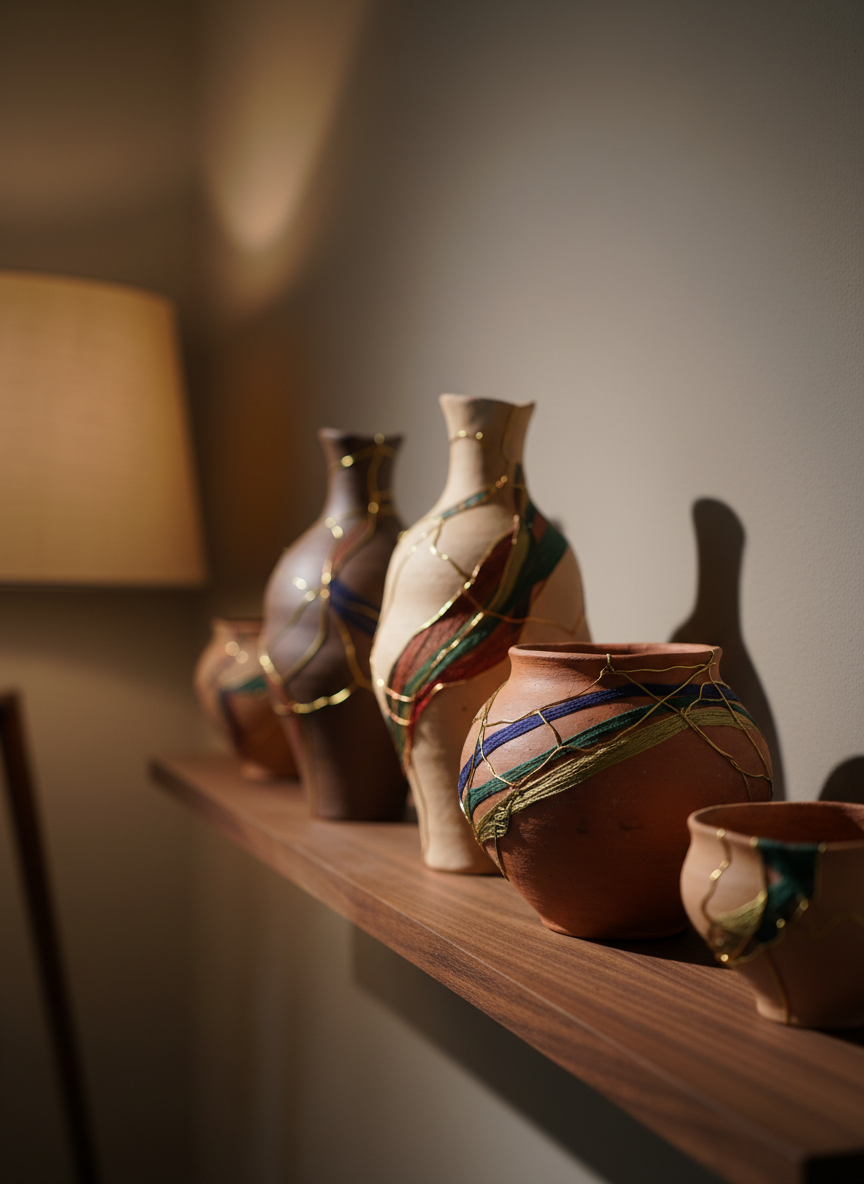
A set of handcrafted clay vessels of varying sizes and earth tones—umber, terracotta, and pale sand—each one visibly repaired with fine, contrasting seams of metal and dyed fiber, placed along a narrow, dark walnut shelf. Behind them, a smooth plaster wall in soft matte taupe provides a calm backdrop. Gentle side lighting from an unseen floor lamp with a linen shade creates delicate highlights on the vessels’ curves and casts understated, overlapping shadows along the wall. Photographed at close range with a shallow depth of field, the foremost vessel is in sharp focus while the others blur progressively, suggesting continuity across generations. The mood is intimate, refined, and quietly hopeful, rendered in photographic realism with a minimalist, gallery-like aesthetic that honors reclamation and care.

Aya Nakamura

Our circle rekindled trust I thought was lost, helping my family listen differently and share burdens we’d carried alone for years.
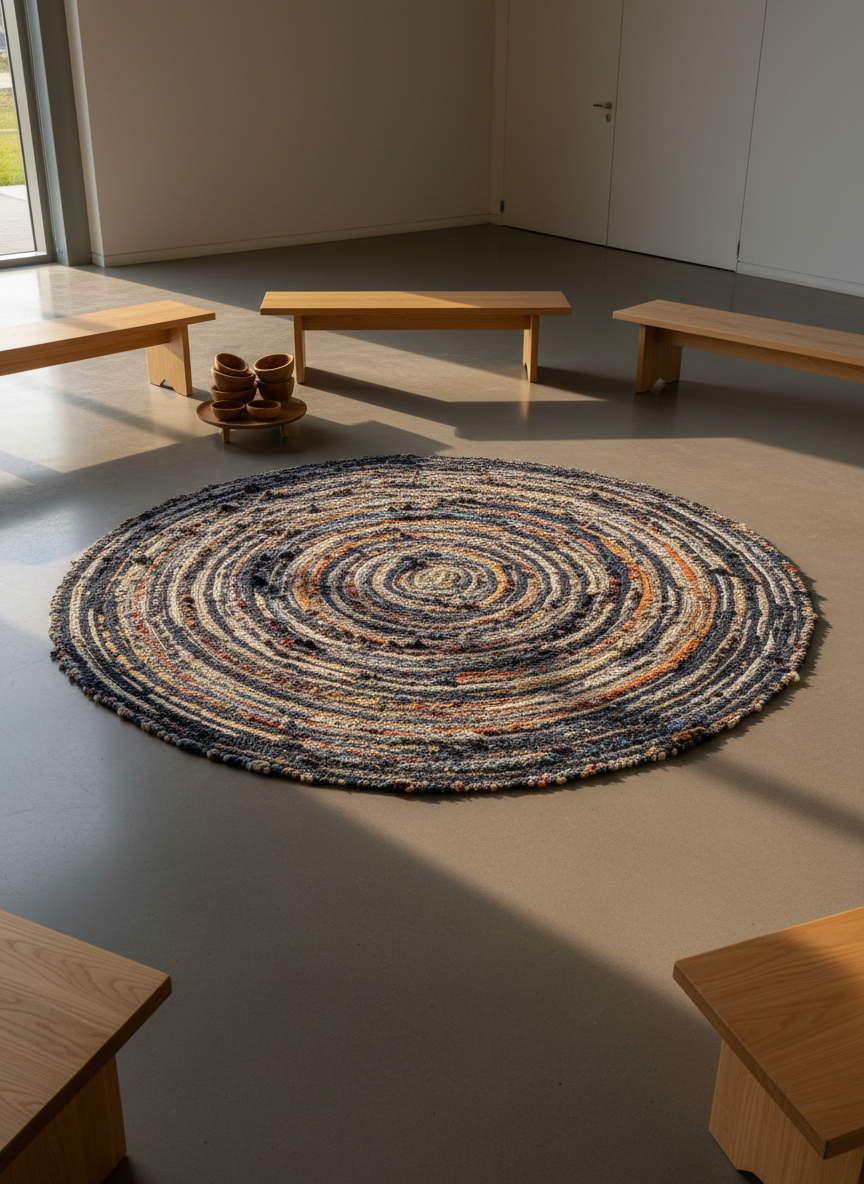
An intricately woven circular rug made from reclaimed fabrics in deep indigo, warm ochre, and soft cream, its textures subtly varied and tactile. The rug rests at the center of a polished concrete floor in a minimalist community space, surrounded by low wooden benches and neatly stacked hand-carved bowls. Late afternoon natural light pours through large unseen windows, washing the scene in a gentle golden glow and casting soft, elongated shadows. Shot at eye level with a slightly wide angle, the composition centers the rug while keeping the room in crisp focus. The mood is contemplative and dignified, photographic realism with a clean, sophisticated aesthetic that quietly suggests gathering, reflection, and shared repair without showing any people.

Mateo García

Amistad Way offered language and rituals for mending harm, so our neighborhood coalition could confront conflict without sacrificing care.
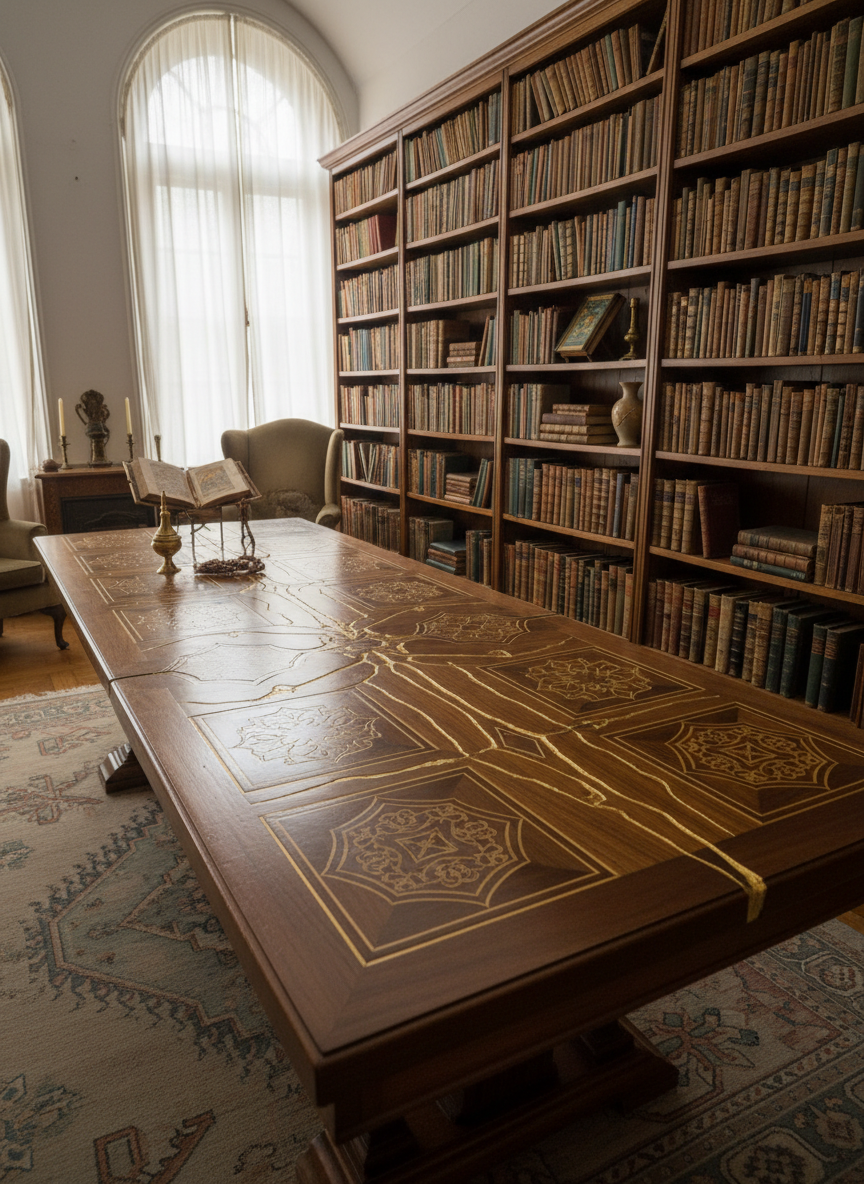
A meticulously restored wooden table, its surface bearing fine inlay patterns inspired by multiple cultural motifs, each segment carefully mended with visible golden joinery reminiscent of kintsugi. The table stands in a serene, high-ceilinged room lined with bookshelves filled with worn, cloth-bound volumes and small ceremonial objects. Soft overcast daylight filters through tall, sheer-draped windows, creating a diffused, even illumination that highlights the grain of the wood and the gentle shimmer of the gold repairs. Captured from a slightly elevated three-quarter angle using photographic realism, the composition follows the rule of thirds, with the table leading the eye into the depth of the room. The atmosphere feels scholarly yet warm, evoking reverence for diverse wisdom traditions and the beauty of intentional repair.
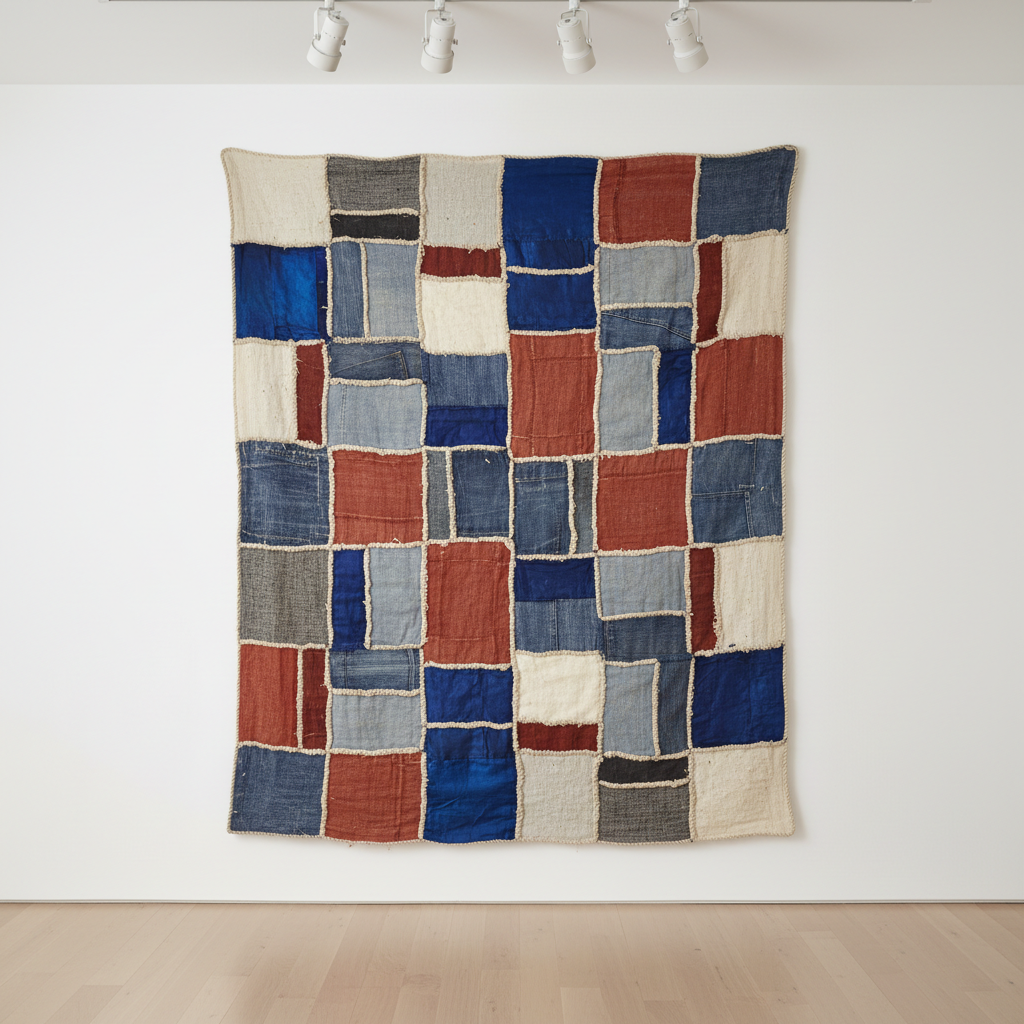
A large, vertical patchwork hanging made from reclaimed textiles—vintage silks, rugged denim, handwoven cottons—each piece stitched together with visible, deliberate seams in contrasting thread, forming an abstract yet harmonious pattern. The hanging is suspended against a smooth, off-white gallery wall in a modern community arts space with pale oak flooring. Soft, even track lighting from above illuminates the varied textures and subtle color shifts, from deep blues and rust reds to soft grays and creams. Photographed from a straight-on, eye-level perspective with sharp detail across the entire frame, the composition is centered and symmetrical, emphasizing balance and cohesion. The mood is elevated and contemplative, with photographic realism and a clean, sophisticated style that symbolizes collective repair, shared histories, and the reclamation of discarded materials.
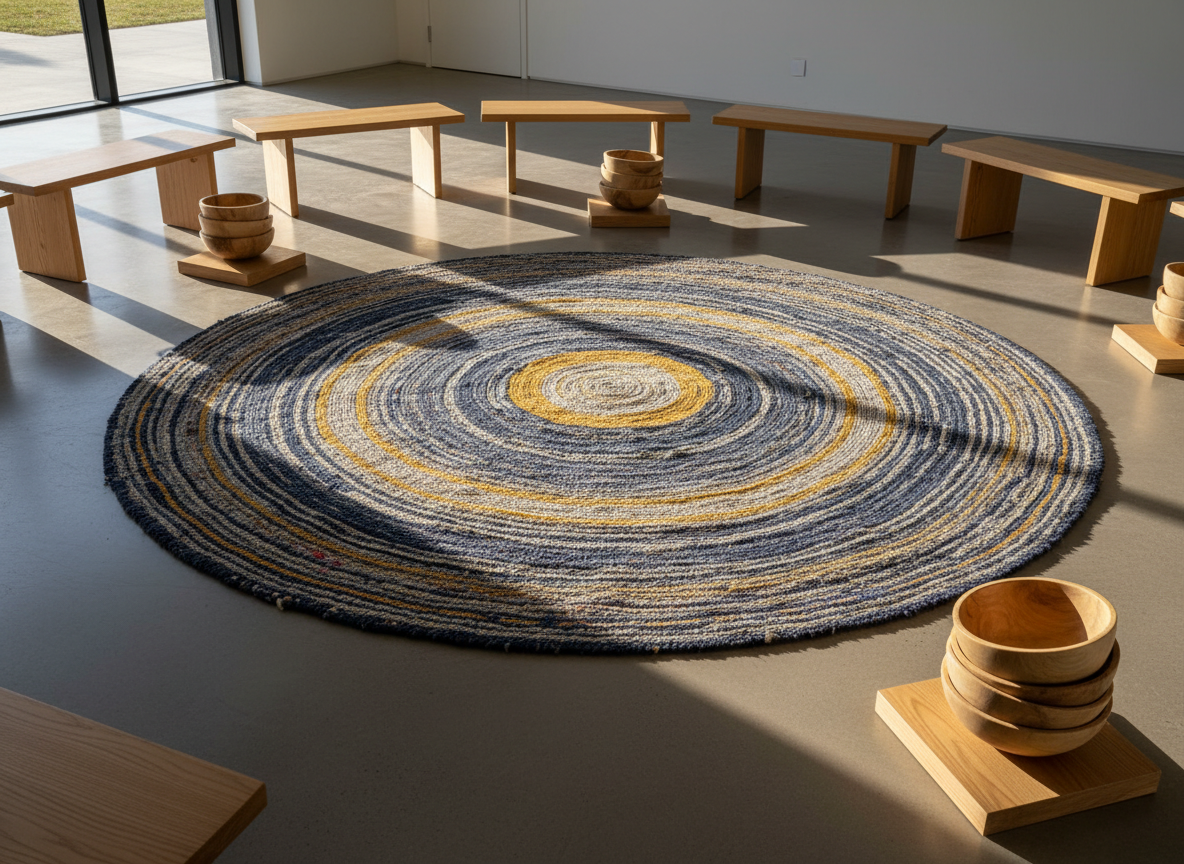
An intricately woven circular rug made from reclaimed fabrics in deep indigo, warm ochre, and soft cream, its textures subtly varied and tactile. The rug rests at the center of a polished concrete floor in a minimalist community space, surrounded by low wooden benches and neatly stacked hand-carved bowls. Late afternoon natural light pours through large unseen windows, washing the scene in a gentle golden glow and casting soft, elongated shadows. Shot at eye level with a slightly wide angle, the composition centers the rug while keeping the room in crisp focus. The mood is contemplative and dignified, photographic realism with a clean, sophisticated aesthetic that quietly suggests gathering, reflection, and shared repair without showing any people.